

Pull open most UK kitchen drawers and you'll find a tangle of fish slices, wooden spoons, a whisk and at least one plastic spatula with a slightly melted edge.
That last one is usually where the silicone question starts.
Here's a number worth knowing before you decide anything. When German regulators tested 33 nylon kitchen utensils, 10 released more plastic oligomers into food than the 5 mg/kg guideline set by the Federal Institute for Risk Assessment (BfR, 2019).
It doesn't mean your spatula is dangerous. It does show that what your tools are made of, and how you use them, makes a measurable difference. This guide sets out what UK and European evidence says, and how to update your kitchen without binning everything.
Key Takeaways
- The Food Standards Agency considers it unlikely that microplastics in food cause harm, but keeps the evidence under review.
- Nylon tools can release oligomers above 70°C, so keep hot contact short.
- Good-quality, post-cured silicone suits hot, flexible jobs and non-stick pans.
- Replace any tool that's melted, cracked or badly scratched, whatever it's made of.
Is silicone safe to cook with in the UK?
Yes. Silicone made for food contact is widely used and considered suitable for cooking when it's properly manufactured and used within its temperature rating. In Great Britain, all food-contact materials must meet the rules carried over from EU Regulation 1935/2004, which stop materials transferring substances into food in amounts that could harm health.
That regulation still applies in Great Britain as assimilated law. It covers silicone, plastic, wood, metal and everything else that touches food. Put simply, a product sold for food use shouldn't change your food's safety, taste or smell under normal use.
Silicone has a different chemistry from typical plastics. Its backbone is made of silicon and oxygen, not carbon chains. That's why a silicone spatula can bend against a hot frying pan without softening the way a cheap plastic one might.
What silicone can do is release small leftover molecules called siloxanes, mostly in its first few uses and mostly into fatty foods. Good manufacturers reduce this with post-curing, where finished products are heated again to drive off volatile compounds.
The difference is large. In a 2025 lab study, silicone moulds that skipped post-curing released 153 mg/kg of small siloxanes into shortcrust pastry on first use. Post-cured moulds released 9.5 mg/kg (Food Additives & Contaminants, 2025).
What does the Food Standards Agency say about microplastics?
The FSA's current view is that it's unlikely microplastics in food or drink cause harm to consumers, based on the information available. Its independent advisory committee, the COT, has said the data is too limited for a full risk assessment, and the FSA keeps the issue under review (UK Parliament written answer, 2025).
That lines up with Europe more widely. The European Food Safety Authority reviewed 1,711 publications in 2025 and concluded that microplastics can be released from food-contact materials during normal use. It also found release levels were lower than some earlier studies suggested, partly because many studies had methodological flaws (EFSA, 2025).
Public awareness has grown fast. EFSA's 2025 Eurobarometer found 73% of Europeans have heard of microplastics in food, up eight points since 2022 (EFSA).
So the sensible middle ground is this: there's no proven health risk from normal exposure, but reducing avoidable wear on the plastic that touches your food is a low-cost, low-regret step.
Is silicone better than plastic for kitchen utensils?
For hot cooking and non-stick pans, silicone usually has the edge. It tolerates more heat than most plastic utensils, it's gentle on coated pans and it doesn't carry the heat-related oligomer concern linked to nylon. For cold prep and storage, plastic in good condition often does the job well.
A quick comparison for everyday UK cooking:
| Material | Handles heat? | Safe on non-stick? | What to watch | Where it shines |
|---|---|---|---|---|
| Silicone | Yes, within its rating | Yes | Cheap, uncured products | Spatulas, scrapers, pastry brushes |
| Nylon | Moderately | Yes | Oligomers above 70°C; melting on hot pans | Quick flipping and stirring |
| Hard plastics | Limited | Usually | Warping, scratches, wear | Cold mixing, serving, storage |
| Wood | Yes | Yes | Cracks if left soaking | Stirring stews, sauces, porridge |
| Stainless steel | Yes | No | Scratches coated pans | Whisks, tongs, fish slices for steel pans |
The takeaway? Pick the material for the job, not the trend.
Do plastic utensils put microplastics in your food?
Worn and scratched plastic can shed particles, and abrasion is the main cause. The best-known kitchen study looked at chopping boards and estimated up to 79.4 million polypropylene microplastics a year could come from one board (Yadav et al., 2023). Utensils see far less abrasion than boards.
That study found polypropylene boards released 14 to 71% more particles by number than polyethylene boards. It also ran a preliminary test on mouse cells and saw no drop in cell viability from the particles over 72 hours.
Knife-on-board contact is much harsher than a spoon stirring a pan, so those figures shouldn't be applied to every plastic tool. But the principle holds. The more scratched, rough or chewed-up a plastic surface gets, the more material it can lose.
A good rule: if you can see the damage, it's time for a replacement.
Are nylon cooking utensils safe to use?
Nylon is fine for quick jobs, but the BfR advises keeping its contact with food above 70°C as brief as possible. Heat helps small molecules called cyclic oligomers move out of polyamide into food. The institute doesn't tell consumers to stop using nylon, only to limit long, hot contact.
In the data the BfR assessed, 23 of 33 utensils stayed below its 5 mg/kg guideline, while 10 went over. It asked manufacturers to improve production to cut migration (BfR, 2019).
In practice, flipping a pancake with a nylon fish slice is very different from leaving a nylon spoon in a bubbling ragù for an hour. For long, hot stirring, a wooden spoon or silicone spatula is the easier choice.
Should I get rid of black plastic kitchen utensils?
Only if they're damaged. A 2024 study found flame retardants from recycled electronics in black plastic household items, and it sparked "bin your spatula" headlines worldwide. The authors later corrected a calculation error, putting estimated utensil exposure roughly 12 times below the US EPA reference dose.
The original paper said daily intake of 34,700 nanograms was close to a safe limit of 42,000. The EPA-based figure for a 60 kg adult was actually 420,000 nanograms a day (Nexstar/NewsNation, 2024).
The concern about recycled electronics plastic finding its way into kitchenware remains valid. But the corrected numbers don't justify panic. Replace black plastic tools that are melted, cracked or flaking, and switch the rest at your own pace.
Does silicone leach chemicals into food?
Silicone can release siloxanes, though well-cured products release far less. Migration is highest during the first few uses, higher with fatty foods and higher in long oven bakes. A spatula's brief contact with food is a much lighter exposure than a baking mould's 30 minutes in the oven.
European testing shows how much quality varies:
- Austrian consumer group VKI tested 22 silicone baking moulds. Six were rated green, 10 amber and six red (LEBENSART/VKI, 2022).
- German regulator LAVES tested 37 silicone baking tools, including spatulas, brushes and whisks, in 2023 and 2024. None were flagged (LAVES).
- In LAVES's earlier 2019 round, six of 73 silicone products were flagged for high volatile compounds.
The pattern is consistent. Properly made silicone can meet the standards. Cheap, poorly finished silicone is where problems show up.
How do you know if silicone is good quality?
Look for clear food-contact labelling, a stated maximum temperature and care instructions from a brand you can contact. "Platinum-cured" is a useful sign, since platinum curing leaves fewer by-products than older peroxide methods. A strong chemical smell out of the box is a warning sign.
Before you buy, check for:
- Food-contact use stated on the packaging or listing
- A maximum temperature in °C
- Dishwasher guidance
- What the core and handle are made from
- Company contact details
Greentainer describes the silicone in its range, such as the seal ring in our stainless steel overnight oats pot, as platinum-cured.
Is the silicone pinch test reliable?
The pinch test (twist it, and if it goes white it has fillers) is repeated everywhere online. It's a rough clue, not a reliable test. Most silicone rubber contains reinforcing silica, and colour and thickness change how a stretched spot looks. Clear labelling and a trustworthy brand tell you far more.
What temperature can silicone utensils take?
Check the manufacturer's rating. There's no single figure for every product. Many silicone utensils are rated around 200 to 260°C, but that doesn't mean they can sit on a gas flame or rest against a hot pan for ages. Heat damage shows up as stickiness, brittleness or melted spots.
Simple habits help your silicone last:
- Rest it on a spoon rest, not the pan edge.
- Keep it well away from gas flames and grill elements.
- Don't leave it in an empty pan heating on the hob.
What are the best utensils for non-stick pans?
Silicone and wood are the best choices for non-stick pans. Both are softer than the coating, so they're much less likely to scratch it than metal. A thin silicone fish slice is ideal for eggs and pancakes, while a wooden spoon is great for stirring sauces.
Scratched non-stick coatings make food stick and shorten a pan's life. Save stainless steel tools for stainless, carbon steel and cast iron.
Why does my silicone taste of washing-up liquid?
Silicone can pick up strong fragrances and oily films, especially from scented dishwasher tablets. It's a common complaint on cooking forums. Swapping to an unscented detergent, or hand washing oily silicone in hot water, usually sorts it out.
For stubborn smells:
- Scrub with a paste of bicarbonate of soda and water.
- Rinse thoroughly in hot water.
- Dry fully before putting away.
- Stick with unscented washing-up liquid or tablets.
In hard-water areas, a white film is usually limescale, not the silicone breaking down. A soak in diluted white vinegar normally removes it.
If a burnt or chemical smell survives cleaning, replace the tool.
Which kitchen items should you swap first?
Swap the items that get hot, get scraped or show damage. Hot, daily-use tools are where material matters most. Cold-use items in good condition can stay, since replacing working products creates waste for little gain.
A sensible order:
- Melted, cracked or flaking plastic utensils.
- Nylon or plastic spoons that sit in hot food for long periods.
- Deeply scored plastic chopping boards.
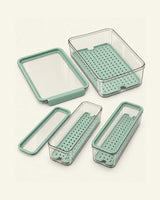
- Containers you reheat food in. Glass or stainless steel are easier choices.
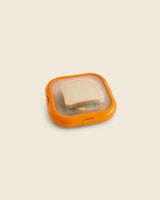
- Lunchboxes that take a daily battering. A stainless steel bento box handles school runs and office days.
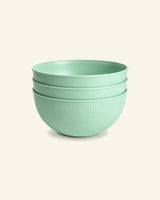
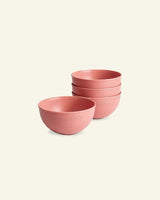
What can stay? A BPA-free plastic bowl used cold for salads, dough or storage is a different situation from a scorched spatula. Our nesting mixing bowls with lids are designed for prep and storage, not the hob. If cupboard space is tight, here's how to store mixing bowls without wasting cabinet space.
And if you're still deciding between materials for bowls, our comparison of stainless steel, plastic and glass mixing bowls goes deeper.
When should you replace a silicone spatula?
When it's torn, sticky, cracked, loose on the handle or keeps smelling burnt after cleaning. Good silicone can last years, but damage creates crevices that trap food and may expose the core.
Watch for:
- Cuts or tears in the head
- A tacky surface that won't wash off
- Cracking or brittleness
- A visible inner core
- A wobbly join between head and handle
- Scorch marks or melted patches
Is silicone more sustainable than plastic?
Often, because it lasts longer, but it isn't perfect. Silicone is energy-intensive to make and rarely accepted in UK household recycling. The greenest option is usually fewer, better tools that suit their job and last for years.
That's the thinking behind Greentainer: own less, choose the right material and keep it in use. Read more on our Our Story page.
Frequently Asked Questions
Is silicone safer than plastic for cooking?
For hot cooking, well-made silicone is generally the better option. It handles more heat and avoids the oligomer issue the BfR found with nylon, where 10 of 33 utensils exceeded its 5 mg/kg guideline. Choose food-contact, post-cured silicone with a clear temperature rating.
Does the FSA say microplastics are harmful?
No. The FSA considers it unlikely that microplastics in food or drink cause harm based on current information, while its advisory committee says data is too limited for a complete assessment. It keeps the evidence under review, and EFSA has reached similar conclusions about gaps in the research.
Are wooden spoons better than silicone?
They suit different jobs. Wooden spoons are excellent for stirring thick sauces and stews and won't scratch non-stick pans. Silicone is better for scraping bowls and flipping delicate food. Many cooks keep both, and either is a good swap for a worn plastic spoon.
Can I put silicone utensils in the dishwasher?
Most are dishwasher safe, but check the care label. Scented tablets can leave a soapy taste on silicone, so unscented detergent or hand washing works better for some people. A bicarbonate of soda scrub usually clears lingering smells.
Do silicone utensils release microplastics?
Silicone isn't a carbon-based plastic, so research focuses on siloxanes rather than microplastics. One 2025 study found post-cured silicone released 9.5 mg/kg of small siloxanes into pastry, against 153 mg/kg from non-post-cured moulds. Quality makes a big difference.
How long do silicone utensils last?
A well-made silicone spatula can last many years with sensible use. Replace it when it tears, turns sticky or cracks, or when it keeps a burnt smell after cleaning. Condition matters more than age.
Better Materials, One Tool at a Time
A healthier-feeling kitchen doesn't need a full clear-out.
Start with the spatula that's been melting on the frying pan. Then the scarred chopping board. Then the plastic tub you keep microwaving leftovers in. Keep what's still working well.
Silicone for flexible, pan-friendly jobs. Wood for stirring. Stainless steel for strength. Glass for reheating. Plastic, where it's in good shape and used cold.
Want to upgrade at your own pace? Explore the Greentainer range, and sign up to our newsletter at the bottom of the homepage for 15% off your first order. If you'd like to know exactly what a product is made from, drop us a message.
Sources
- UK Parliament written answer on microplastics in food (March 2025), citing FSA and COT
- EFSA (2025), Literature review on micro- and nanoplastic release from food contact materials during their use, EN-9733
- EFSA, Microplastics and nanoplastics in food topic page (Eurobarometer 2025 data)
- BfR Opinion No. 036/2019, Polyamide kitchen utensils: keep contact with hot food as brief as possible
- Yadav et al. (2023), Cutting Boards: An Overlooked Source of Microplastics in Human Food?, Environmental Science & Technology 57(22)
- Migration of cyclic dimethyl siloxanes from silicone elastomers into food, Food Additives & Contaminants Part A (2025)
- LAVES Niedersachsen, Gut in Form: Küchenutensilien aus Silikon
- VKI silicone baking mould test (2022)
- Liu et al. (2024) and corrigendum, From e-waste to living space, Chemosphere 365


