You buy fresh strawberries, lettuce, cucumbers and vegetables for the week. A few days later, the lettuce looks soggy, the berries have started to soften, and you've forgotten about the vegetables hiding at the back of your refrigerator.
Sound familiar?
For busy families, keeping fruits and vegetables organized can be surprisingly difficult. Moisture collects inside containers, different foods get mixed together, and sometimes perfectly good produce gets thrown away simply because nobody remembered it was there.
A fridge produce storage container with a drainage tray can help with some of these everyday problems.
But which foods should you actually put inside one? Should you wash vegetables first? Can you store Brussels sprouts, berries or even prepared ingredients?
Let's look at how these containers work and how to use them properly.
What Does a Fridge Container With a Drainage Tray Actually Do?
Unlike a regular storage box, a produce container with a drainage tray has a raised, perforated insert underneath the food.
This creates a small gap between your fruits or vegetables and any water collecting at the bottom.
For example, when you store washed cherry tomatoes or cucumbers, leftover water may drip through the insert instead of sitting directly beneath the produce.
The tray doesn't remove moisture from the refrigerator or guarantee that food will last longer. It simply helps separate food from collected liquid.
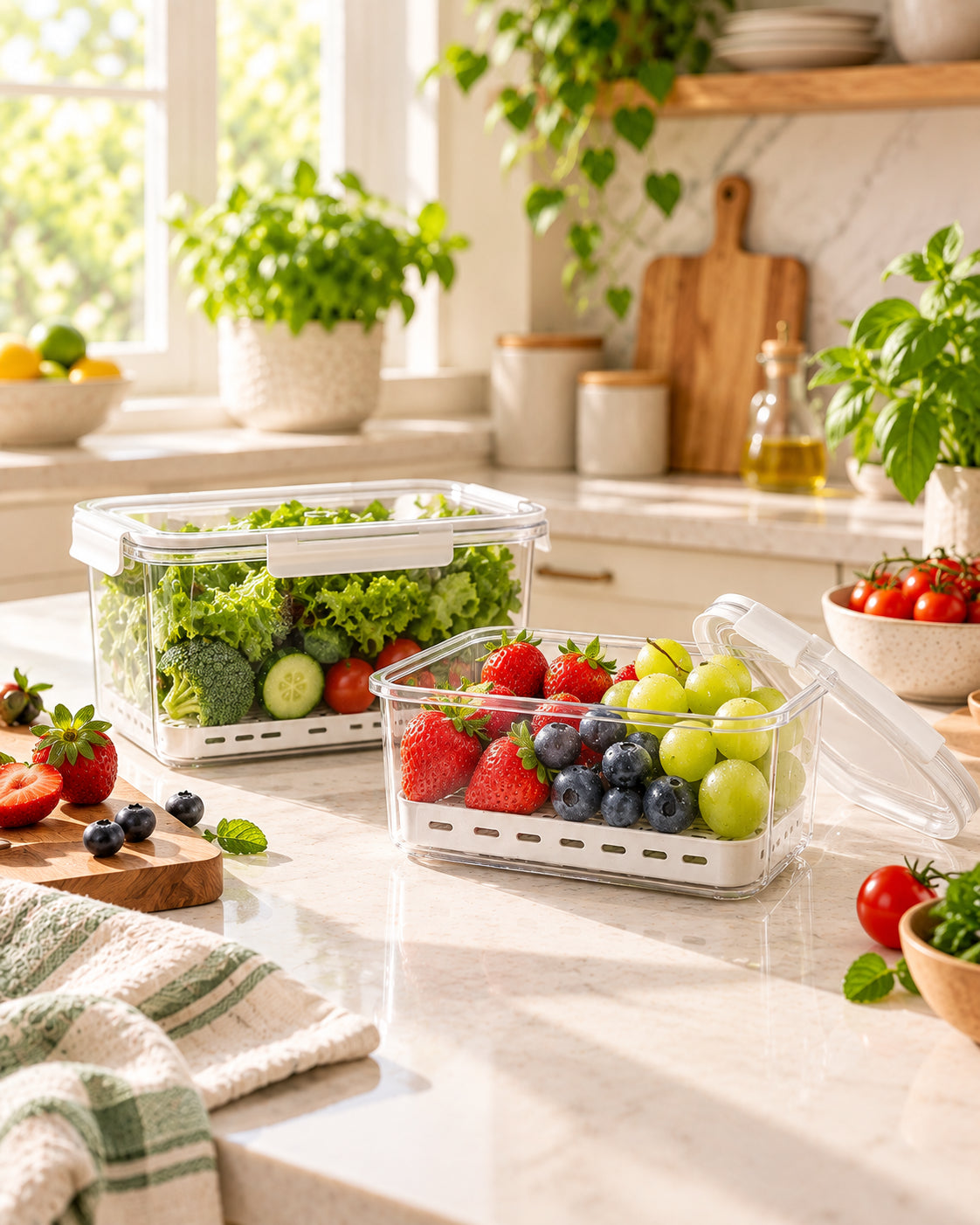
The Greentainer 3-in-1 Fridge Produce Storage Box Set includes:
- One large 6L storage container
- Two smaller 1.6L containers
- Built-in perforated drainage trays
- Clear bodies for viewing the contents
- Stackable sage green lids
Together, they provide 9.2 liters of storage capacity.
The larger container is useful for bulky vegetables and leafy greens, while the smaller boxes work well for berries, grapes and other produce.
What Fruits Can You Store in a Produce Storage Container?
Strawberries, Blueberries and Raspberries
Berries are among the easiest fruits to forget in the refrigerator.
They can also deteriorate quickly when damaged or exposed to excessive moisture.
A drainage tray helps keep berries above any liquid collecting underneath.
For best results, inspect the berries before storing them, remove damaged or moldy fruit, and avoid crowding the container.
Generally, keep delicate berries dry until you're ready to eat them. If you wash them in advance, dry them thoroughly before refrigerating.
Grapes and Cherries
Grapes and cherries are convenient snacks, particularly for families with children.
You can store them in one of the smaller Greentainer containers, making it easier to find them when packing school lunches or preparing breakfast.
Keep cherries refrigerated with their stems attached, and remove any damaged fruit.
Wash thoroughly before eating.
Cut Melon and Other Prepared Fruits
Cut melon needs refrigeration and should be kept separate from raw meat and poultry.
A clean, covered food-storage container can help organize prepared fruit, provided it is suitable for direct food contact.
The drainage insert may be useful where fruit releases excess liquid, but always follow safe refrigeration practices and use cut fruit promptly.
What Vegetables Work Best in Fridge Storage Containers?
Lettuce, Spinach and Other Leafy Greens
Leafy greens take up a surprising amount of refrigerator space.
The 6L Greentainer container can help organize lettuce, spinach, kale and similar vegetables.
However, leafy greens need a balance of moisture. Too much standing water can contribute to sogginess, while overly dry storage can cause wilting.
If you wash leafy greens in advance, remove excess water with a salad spinner or clean towel before storing.
Keep enough humidity around the leaves to prevent drying, and check the container for condensation.
Cucumbers and Bell Peppers
Whole cucumbers and bell peppers can be organized inside produce storage containers.
The clear sides make it easy to see what you have before buying more groceries.
For cut vegetables, proper refrigeration becomes especially important.
Place prepared vegetables in a clean container, keep them covered and avoid leaving them at room temperature for extended periods.
Carrots, Celery and Green Onions
These vegetables are common ingredients in soups, salads and family dinners.
A dedicated refrigerator bin can keep them together instead of scattered across shelves.
Carrots and celery also need sufficient humidity to avoid becoming limp, so don't assume that removing all moisture is beneficial.
For green onions, check regularly for wilting and excess condensation.
Broccoli and Brussels Sprouts
Brussels sprouts become especially popular during fall and Thanksgiving meal preparation in the United States.
Can you store fresh Brussels sprouts in a container with a drainage tray? Yes.
Keep them refrigerated, preferably unwashed until preparation, with enough humidity to prevent drying.
The large Greentainer compartment offers space to organize Brussels sprouts alongside other separately arranged vegetables.
However, this is for storing harvested Brussels sprouts, not growing them.
Growing Brussels sprout plants requires soil, sunlight, root space and suitable growing conditions.
How to Use the Greentainer 3-in-1 Produce Storage Set
One advantage of having three containers is that you can organize different categories of produce separately.
Here's a practical example for weekly grocery shopping.
Large 6L container: Use it for romaine lettuce, spinach, broccoli or Brussels sprouts, depending on what your family plans to cook.
First 1.6L container: Keep strawberries, blueberries or grapes together for breakfasts and snacks.
Second 1.6L container: Organize cherry tomatoes, peppers or green onions.
This arrangement is particularly useful for parents who prepare school lunches and family meals throughout the week.
Instead of searching through several grocery bags, you can see your ingredients in one place.
The containers can also be stacked, helping make better use of refrigerator shelf space.
Avoid overfilling them, especially with delicate berries or leafy greens.
Should You Wash Vegetables Before Putting Them in Storage Containers?
It depends on the produce and when you plan to use it.
For delicate berries, washing immediately before eating is usually a practical approach because excess moisture can encourage deterioration.
If you prefer washing vegetables during your weekly meal prep, make sure they are dried appropriately before storage.
According to the US Food and Drug Administration, fresh produce should be washed under running water before preparation or consumption.
The FDA also recommends keeping perishable produce refrigerated at 40°F (4°C) or below.
A drainage tray is helpful for managing collected moisture, but it does not replace proper washing, drying or refrigeration.
Can You Use These Containers for Turkey, Greek Yogurt or Sprouts?
Some shoppers may wonder whether a draining container can also serve other kitchen purposes.
Can you marinate turkey in it?
This is not the recommended use. Raw turkey should be marinated in a suitable covered, food-safe vessel inside the refrigerator.
The Greentainer set is designed for produce storage, and its drainage insert would allow marinade to collect below the meat.
Keep raw poultry completely separate from ready-to-eat fruits and vegetables.
Can you make Greek yogurt in it?
Not directly. Making yogurt requires controlled fermentation, while Greek-style yogurt is made by straining whey from yogurt.
The Greentainer drainage tray is not a fine yogurt strainer, and the product has not been verified for this process.
You can, however, use its produce compartments to store berries for yogurt breakfasts.
Can you grow sprouts in it?
The set isn't designed for growing edible seed sprouts or Brussels sprout plants.
Its intended purpose is refrigerated produce storage, not plant cultivation or germination.
What Foods Shouldn't You Store in These Fridge Containers?
Not everything belongs in a covered produce box.
Whole potatoes, dry onions and garlic generally need cool, dark, well-ventilated storage rather than refrigerator containers.
Mushrooms often benefit from breathable paper packaging because excess trapped humidity can accelerate deterioration.
Bananas and whole unripe tomatoes also have different storage requirements from refrigerated berries and leafy greens.
A good refrigerator organization system isn't about putting every food into a matching container. It's about storing each ingredient in conditions appropriate for it.
Is a $47.99 Produce Storage Set Worth It?
The Greentainer 3-in-1 Fridge Produce Storage Box Set with Drainage Tray is currently listed at $47.99.
For that price, you receive three modular containers rather than a single refrigerator bin.
The main advantages are the removable drainage trays, separate compartments, visible contents and stackable design.
For families that regularly buy fresh produce, these features may make grocery organization and weekly meal preparation more convenient.
Of course, no container can prevent every strawberry from spoiling or guarantee additional days of freshness.
Correct storage temperatures, appropriate humidity, food quality and handling still matter.
A Better-Organized Fridge Starts With Small Changes
You don't need a complete refrigerator makeover to make your kitchen more organized.
Start by separating your berries, leafy greens and everyday vegetables. Keep excess water away from produce where appropriate, check for spoilage and store foods at safe temperatures.
A well-organized refrigerator helps you see what you already have and plan meals around ingredients before they go to waste.
Want to make weekly grocery storage easier?
Shop the Greentainer 3-in-1 Fridge Produce Storage Box Set and give your fresh produce a dedicated place in your refrigerator.