
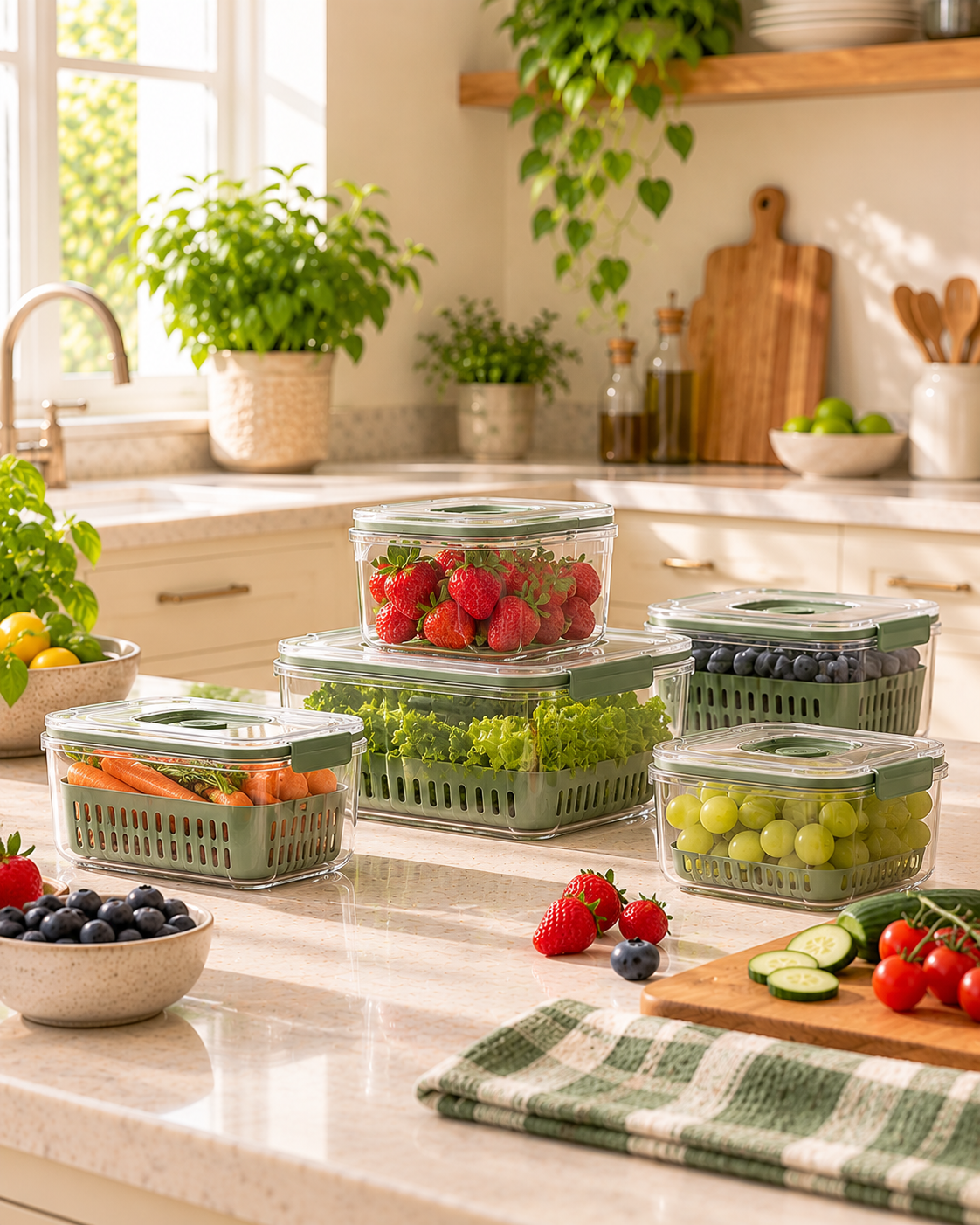
You buy a clamshell of strawberries on Sunday, and by Wednesday there's fuzz on half of them. Sound familiar? Fresh produce is one of the easiest things to waste at home. USDA's Economic Research Service found that vegetables had the largest consumer-level loss of any food group, and that 72 percent of vegetable losses in 2010 happened in homes and away-from-home eating places rather than in stores.
That's why produce storage containers are so popular. But do they actually work, or are they just nicer-looking boxes? The short answer is yes, but less dramatically than the packaging suggests, and only if you use them correctly.
The short answer
-
Produce storage containers can add a few days of life to delicate produce like berries and salad greens, mostly by keeping them away from excess moisture.
-
A controlled Consumer Reports test found the gains were modest. No container performed miracles.
-
How you store produce matters as much as what you store it in. A produce keeper with a removable colander works best alongside dry storage, sorting out damaged pieces and using the right fridge drawer.
Do produce storage containers actually work?
The most rigorous independent test we found came from Consumer Reports. It noted that some manufacturers claim their containers extend produce life by 33 to 80 percent, so it bought seven preservation systems with freshness claims and tested them. Testers used supermarket strawberries, raspberries, mesclun mix and heads of leaf lettuce, moving them into containers from Debbie Meyer, Oxo, Prepworks and Rubbermaid while keeping some in their original packaging.
The results were honest and a little deflating. During the first week, some containers extended produce life slightly, but none were much better than the original packaging. After two weeks, none of the food was still good enough to eat.
There were still winners by produce type:
-
Strawberries: The Rubbermaid FreshWorks container, which lifts food on a tray and has a vented lid, was among the best performers.
-
Raspberries: Debbie Meyer GreenBoxes and the original containers kept in the main fridge compartment looked best at one and two weeks.
-
Salad greens: The Oxo GreenSaver, with a colander, adjustable vent, water space and charcoal filter, kept both lettuces in good shape at the one-week mark.
Home testers often report bigger wins. A writer at The Kitchn split a batch of strawberries between a Rubbermaid container and the original clamshell, and some berries in the clamshell had mold after just two days. Taste of Home ran six produce keepers for 10 days against original packaging in the crisper, a Mason jar and freezer bags. These are single-kitchen tests, so treat them as encouraging rather than conclusive.
So what's the honest takeaway? A good produce keeper can buy you a few extra days, especially for berries and greens. It won't turn a two-day strawberry into a two-week one.
Why does produce go bad in the first place?
Fruits and vegetables are still alive after harvest. They keep breathing, ripening and losing water in your fridge. Three things speed that up at home: moisture in the wrong places, ethylene gas and physical damage.
Moisture. Too little and greens wilt. Too much and mold moves in. University of Georgia Extension notes that relative humidity of 85 to 95 percent is usually recommended for storing most fresh vegetables. The trouble is condensation: water pooling on berries or leaves gives mold exactly what it needs. UF/IFAS Extension warns that washing produce as soon as you get home adds excess moisture that can promote spoilage. It's the same reason granola stays crunchier when you keep it separate from yogurt: unwanted moisture ruins texture fast.
Ethylene gas. Iowa State University Extension explains that some produce gives off ethylene as it ripens, and nearby produce exposed to it can ripen further and start to rot. UGA Extension adds that ethylene in the storage space speeds up ripening and aging in ethylene-sensitive crops, shortening their shelf life.
Bruising and damage. One soft berry really can spoil the batch. UGA Extension lists injuries, temperature stress and fungal attacks among the factors that increase ethylene production after harvest. Tossing damaged pieces before storage removes a common starting point for rot.
What a produce keeper does (and doesn't) do
Most fruit storage containers rely on the same handful of design features. Here's what each one is actually for.
A raised tray or colander insert. This lifts produce off the bottom, where condensation collects. Wet leaves sitting in a puddle are how you end up with slimy lettuce. If you only look for one feature, make it this one.
Vents. Rubbermaid says the vent on its FreshWorks lid regulates the flow of oxygen and carbon dioxide. In practice, vents let some humidity escape, which helps delicate fruit that molds easily. With a sealed lid, the colander and dry storage do more of the work.
Water reservoirs or filters. Some keepers add a water well for greens or a charcoal filter aimed at absorbing gases. These are extras, not requirements.
Rigid, clear walls. This one gets overlooked. A sturdy container stops berries getting crushed under a bag of carrots, and less bruising means slower spoilage. Clear sides let you see what's inside without opening the lid, so produce doesn't get forgotten at the back of the shelf.
What containers can't do is override temperature, ripeness or time. If fruit was already overripe or bruised when you bought it, no box will save it. Consumer Reports' bottom line was simple: use produce as soon as possible.
Which fruits and vegetables benefit most?
Produce storage containers earn their space with delicate, high-waste items. They add little for sturdy produce, or for items that shouldn't be refrigerated at all.
|
Best in a produce keeper |
Doesn't need one |
Keep out of the fridge |
|---|---|---|
|
Strawberries, raspberries, blueberries |
Whole carrots, cabbage |
Whole tomatoes |
|
Salad greens and spinach |
Citrus |
Bananas |
|
Fresh herbs |
Apples (use the low-humidity drawer) |
Potatoes, onions, dry garlic |
|
Grapes, cherries |
||
|
Cut fruit and prepped vegetables |
Iowa State Extension recommends keeping tomatoes on the counter because cold can dull their flavor and make them too soft, and bananas out of the fridge because their skins turn black. It also notes that potatoes, sweet potatoes, onions and dry garlic prefer cool, dry storage rather than refrigeration.
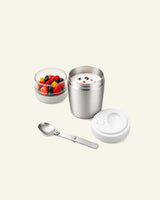
Cut fruit is a special case. Once it's sliced, it's best eaten within a day or two, so portion it into stainless steel snack containers with glass lids for grab-and-go snacks, or into kids' snack containers for the lunch box.


