
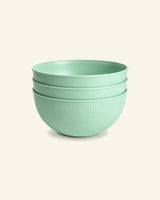
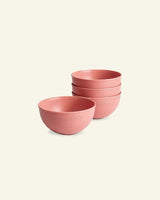
If you are sourcing wholesale BPA-free bowls in the UK, the cheapest unit price should not be your only consideration.
Retailers, kitchenware stores, hospitality suppliers, ecommerce businesses and independent homeware brands also need to look at material safety, bowl sizes, durability, storage efficiency, lids, packaging, repeat availability and the type of customer likely to buy the product.
The market has also become more competitive. UK shoppers can now choose between plastic, stainless steel, glass, melamine and other bowl materials, often in nesting sets with lids. For a wholesale buyer, that means the product has to offer a clear practical reason to be stocked.
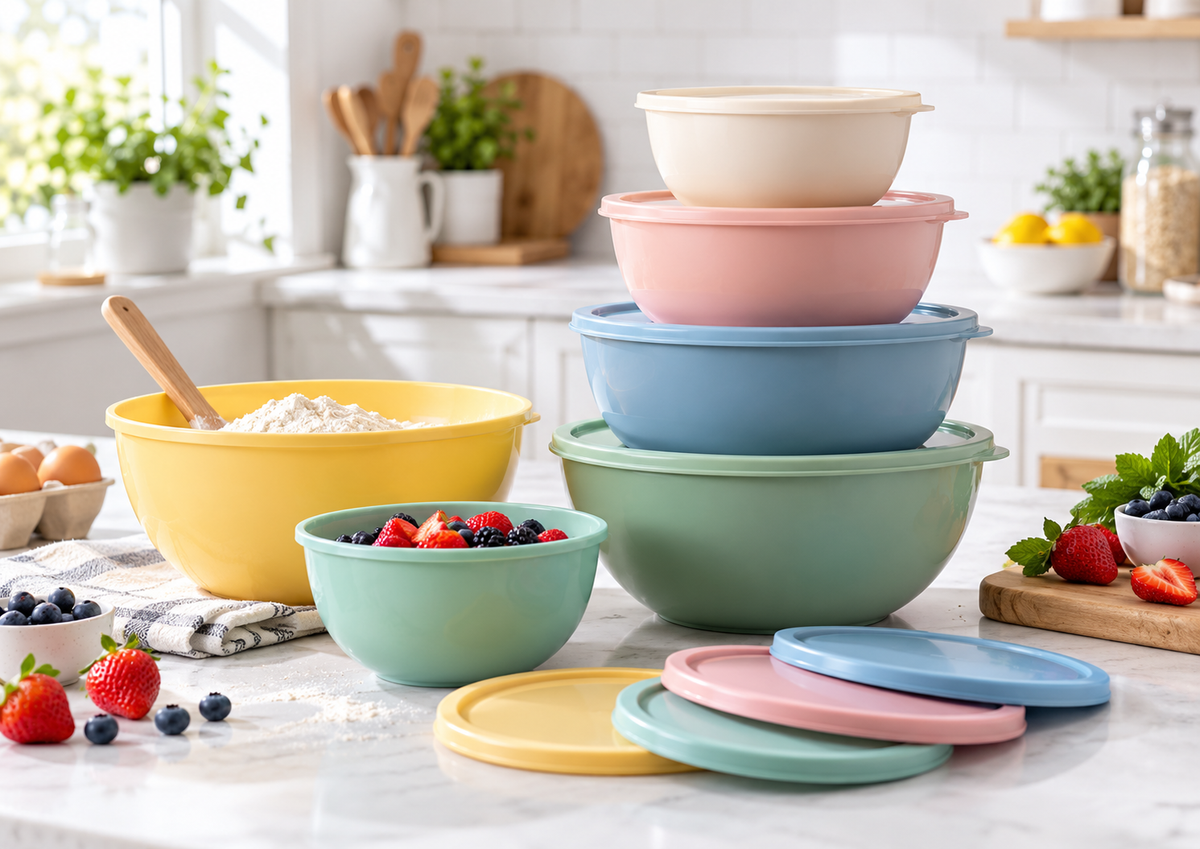
For many retailers, a BPA-free nesting bowl set with lids works well because it combines food preparation, storage and space-saving design in one product.
This guide explains what UK bulk buyers should check before purchasing BPA-free bowls wholesale in 2026.
What Are BPA-Free Bowls?
BPA-free bowls are bowls manufactured without bisphenol A being used in the material as specified by the manufacturer.
BPA has historically been used in certain plastics and food-contact materials. UK food-contact rules control which materials and substances can be used around food and under what conditions.
For wholesale buyers, however, the important point is simple:
Do not treat “BPA-free” as the only sign of product quality.
You should also check:
-
whether the product is intended for food contact
-
the material used
-
temperature limitations
-
dishwasher and microwave instructions
-
supplier documentation
-
lid material
-
product testing or compliance information where applicable
-
the intended use of the bowl
In Great Britain, BPA remains an authorised substance for certain food-contact applications subject to restrictions, although UK authorities have been reviewing the regulatory position. Northern Ireland follows different requirements in areas where EU food-contact rules apply. Buyers supplying different UK markets should therefore check the current requirements that apply to their specific products and destinations.
What Does Food-Grade Mean for Plastic Bowls?
A food-grade bowl is made from material intended to come into contact with food under its stated conditions of use.
That distinction matters.
A plastic product being technically strong or reusable does not automatically make it suitable for preparing or storing food.
UK businesses sourcing plastic food-contact products should ask suppliers for clear information about the material and its intended use.
Depending on the product and your position in the supply chain, relevant documentation can include food-contact declarations or supporting compliance information.
If you sell kitchenware directly to customers, clear product instructions are equally important.
A bowl designed for cold salad preparation may have different temperature limits from one approved for microwave use.
Are BPA-Free Plastic Bowls Safe?
Short answer: BPA-free food-contact bowls can be suitable for everyday kitchen use when they are manufactured for food contact and used according to the manufacturer's instructions.
The phrase BPA-free only addresses BPA. It does not tell you everything about the plastic, its temperature resistance or how the product should be used.
This is why a wholesale buyer should look beyond one claim on the packaging.
Check:
-
material specification
-
food-contact suitability
-
microwave instructions
-
freezer instructions
-
dishwasher instructions
-
maximum recommended temperature
-
whether lids have different care requirements
-
supplier traceability
UK food safety guidance states that materials used around food must be suitable for food contact. Businesses should therefore base purchasing decisions on proper product specifications rather than marketing claims alone.
Why Are UK Buyers Looking for BPA-Free Kitchenware?
Search behaviour around BPA-free kitchen products usually overlaps with broader concerns about:
-
food-safe plastic
-
reusable food containers
-
plastic bowls with lids
-
non-toxic kitchenware
-
food storage safety
-
microwave-safe bowls
-
dishwasher-safe mixing bowls
Customers are not necessarily searching for the chemistry behind BPA.
They are often asking a simpler question:
“Can I safely use this bowl for the food my family eats?”
Retail listings that answer that question clearly usually make the buying decision easier.
For wholesale customers, that creates an opportunity to stock products with understandable specifications instead of relying on vague terms such as “premium quality”.
What Should You Look for When Buying BPA-Free Bowls Wholesale?
For most UK retailers, these are the most important factors.
| Feature | Why it matters for wholesale buyers |
|---|---|
| BPA-free material | Matches a common consumer purchasing preference |
| Food-contact suitability | Essential for kitchen use |
| Multiple bowl sizes | Makes the set useful for different cooking tasks |
| Nesting design | Reduces cupboard and warehouse space |
| Matching lids | Adds storage and meal-prep functionality |
| Dishwasher suitability | Important for convenience |
| Microwave suitability | Useful if explicitly approved by the manufacturer |
| Durable construction | Reduces complaints and damage |
| Lightweight design | Easier to handle and ship |
| Attractive colours | Helps online merchandising and gifting |
| Reliable packaging | Reduces transit damage |
| Consistent supplier stock | Important for repeat sales |
Why Nesting Bowls Are Particularly Useful for Retail
One problem repeatedly discussed by home cooks is the amount of cupboard space taken up by kitchen bowls.
A Reddit discussion about how many mixing bowls people own included users describing full sets in several materials, while other discussions focus specifically on sets that nest inside each other or include lids.
For retailers, that makes space-saving mixing bowls easier to explain than ordinary individual bowls.
A nesting set lets customers own several sizes while using approximately the cabinet footprint of the largest bowl.
This feature is particularly relevant for:
-
flats
-
student accommodation
-
small kitchens
-
family kitchens
-
motorhomes
-
meal-prep households
-
customers trying to reduce cupboard clutter
Greentainer has a detailed guide on how to store mixing bowls without wasting cabinet space, which explains why nesting sets are useful when storage is limited.
How Many Mixing Bowls Should Be in a Wholesale Set?
There is no perfect number, but four to six sizes usually gives customers enough flexibility for everyday cooking without making the set unnecessarily bulky.
A five-piece set is particularly practical because each size can serve a different job.
For example:
-
small bowl for sauces, dips or ingredients
-
smaller-medium bowl for fruit or snacks
-
medium bowl for preparation
-
large bowl for mixing or serving
-
extra-large bowl for dough, salads or batch cooking
This gives retailers a stronger product proposition than selling five bowls that are nearly the same size.
Industry wholesale listings also commonly emphasise size ranges and complete sets rather than single bowls, especially when selling to home and kitchen retailers.
Are Mixing Bowls With Lids Better for Wholesale?
For many retail customers, yes.
A bowl without a lid is primarily a preparation or serving item.
A bowl with a properly fitting lid may also be useful for:
-
refrigerating ingredients
-
meal preparation
-
storing leftovers
-
transporting food where suitable
-
marinating
-
keeping prepared ingredients covered
This extends the number of situations in which the customer can use the product.
Reddit users looking for mixing bowls frequently ask specifically about lids, including whether the lids fit securely and whether the bowls can double as storage containers.
That is useful information for product-page copy.
Instead of advertising only:
“5-piece mixing bowl set”
a retailer can describe:
“5-piece nesting mixing bowl set with matching lids for food preparation, serving and storage.”
That tells customers what the extra value actually is.
What Bowl Material Is Best for Wholesale Buyers?
The right material depends on your target customer.
BPA-Free Plastic Bowls
Best suited to customers who want:
-
lightweight bowls
-
easier handling
-
resistance to shattering
-
colourful designs
-
nesting storage
-
everyday meal preparation
Plastic also tends to be easier and cheaper to ship than glass because of its lower weight and reduced breakage risk.
Stainless Steel Bowls
Stainless steel is popular for:
-
heavy mixing
-
baking
-
whisking
-
commercial-style kitchens
-
customers prioritising long-term durability
Greentainer also stocks a stainless steel mixing bowl set for buyers who prefer metal bowls.
Glass Bowls
Glass works well for customers who value:
-
ingredient visibility
-
stain resistance
-
reheating where the product is approved
-
a heavier bowl during mixing
The main trade-offs are weight and breakage.
If you are deciding which material fits your retail range, read our comparison of plastic vs stainless steel vs glass mixing bowls.
Plastic vs Stainless Steel vs Glass for Bulk Purchasing
| Requirement | BPA-Free Plastic | Stainless Steel | Glass |
|---|---|---|---|
| Lightweight | Excellent | Good | Poor |
| Break resistance | Excellent | Excellent | Lower |
| Easy shipping | Excellent | Good | Lower |
| Nesting potential | Excellent | Excellent | Good |
| Colour options | Excellent | Limited | Limited |
| Ingredient visibility | Limited | None | Excellent |
| Commercial feel | Good | Excellent | Good |
| Family use | Excellent | Excellent | Good |
| Child-friendly handling | Good | Good | Lower |
| Storage with lids | Excellent | Good | Excellent |
There is no universal winner.
A retailer selling to families and home cooks may prefer lightweight nesting plastic bowls.
A baking specialist may want stainless steel.
A premium cookware shop may stock all three.
What Sizes of Mixing Bowls Sell Best?
Customers normally want a range rather than one single capacity.
Typical uses vary significantly.
A smaller bowl works for chopped ingredients, dips or beaten eggs.
A medium bowl works for batters and food preparation.
A large bowl is useful for salads, bread dough, baking mixes and serving.
Greentainer's nesting bowl range includes several graduated sizes so buyers do not have to purchase separate bowls individually.
The 5-piece Greentainer mixing bowl set uses a nesting format with matching lids, allowing the bowls to be stored together between uses.
Why Bowl Dimensions Matter to Wholesale Buyers
Capacity alone does not tell the whole story.
Two 3-litre bowls may have very different shapes.
A wider bowl can be better for:
-
tossing salad
-
whisking
-
coating ingredients
-
serving
A deeper bowl may be better for:
-
mixing batter
-
bread dough
-
preventing splashes
-
storing prepared food
Wholesale product listings should ideally show both capacity and physical dimensions.
That helps customers decide whether the bowl will fit:
-
their cupboard
-
refrigerator shelf
-
dishwasher
-
microwave
-
kitchen drawer
It also reduces unnecessary returns.
Are BPA-Free Bowls Microwave Safe?
Not automatically.
BPA-free and microwave-safe are two different claims.
A BPA-free plastic bowl should only be used in a microwave if the manufacturer specifically states that it is microwave-safe.
The same principle applies to:
-
dishwasher use
-
freezer use
-
oven use
-
hot liquids
Do not assume that one safety statement guarantees another.
This is especially important for wholesalers because retailers may copy supplier specifications directly onto their product pages.
Incorrect specifications can quickly become customer complaints.
Are BPA-Free Bowls Dishwasher Safe?
Some are, but again, the manufacturer must specify this.
Dishwasher compatibility is an important selling feature because mixing bowls are frequently used for sticky ingredients such as:
-
dough
-
cake batter
-
eggs
-
sauces
-
marinades
-
oil-based dressings
If the lids have different washing instructions from the bowls, state that clearly.
Some kitchenware suppliers recommend top-rack cleaning for plastic lids even when the bowls themselves can go through a normal dishwasher cycle.
Are BPA-Free Bowls Suitable for Food Storage?
They can be when they are designed for food storage and supplied with suitable lids.
For retailers, bowls that work for both food preparation and refrigerated storage can be easier to sell because customers need fewer separate containers.
This is particularly useful for:
-
batch cooking
-
leftovers
-
chopped vegetables
-
prepared salad
-
dough
-
marinades
-
meal prep
The important distinction is to follow the product's stated use and temperature instructions.
What Is the Benefit of Buying Bowl Sets Instead of Individual Bowls?
Complete sets solve several purchasing problems at once.
Customers receive:
-
several useful capacities
-
matching designs
-
compatible lids
-
consistent materials
-
easier storage
-
better visual organisation
For retailers, sets can also create a clearer perceived value than single bowls.
A well-designed nesting set feels like a complete kitchen solution rather than another isolated utensil.
What Do Customers Actually Ask About Mixing Bowls?
Discussions on cooking communities tend to focus less on brand language and more on practical use.
Common questions include:
Are they durable?
Customers want bowls that can handle regular cooking without cracking, chipping or deforming.
Do the bowls nest?
Storage matters, especially when several bowl sizes are included.
Do they have lids?
Many buyers want their mixing bowls to double as temporary food-storage containers.
Are they heavy?
One Reddit discussion comparing recommendations specifically mentioned weight and handling as a consideration alongside longevity and versatility.
Which material should I choose?
Plastic, stainless steel and glass each have supporters because they solve different problems.
Can I put them in the dishwasher?
Convenience matters heavily for products used several times a week.
Are the lids actually useful?
Loose or poorly fitting lids can turn a strong product into a frustrating one.
These questions should influence both wholesale purchasing and product-page content.
What Should Retailers Ask a Wholesale Bowl Supplier?
Before placing a larger order, ask:
-
What material are the bowls made from?
-
Are they intended for food contact?
-
Are they BPA-free?
-
What evidence supports the product claims?
-
Are the bowls dishwasher-safe?
-
Are they microwave-safe?
-
Are they freezer-safe?
-
Are the lids made from the same material?
-
What temperatures are they designed for?
-
Do all bowls have matching lids?
-
What are the individual capacities?
-
Do they nest completely?
-
What is the packed carton size?
-
What is the unit weight?
-
What is the minimum order quantity?
-
What is the wholesale price at different quantities?
-
What is the normal UK delivery time?
-
How are damaged units handled?
-
Can stock be replenished consistently?
-
Is private-label or custom packaging available?
These questions matter more than simply asking for a wholesale price.
A product that costs slightly less but creates returns, damaged deliveries or stock gaps can be more expensive in the long run.
What Makes a Good Wholesale Bowl Product for Ecommerce?
Online customers cannot physically inspect the bowl.
Your product listing has to do the work for them.
A good ecommerce listing should show:
Exact capacities
Do not write only “small, medium and large”.
List litres or millilitres.
Measurements
Show width, height and depth.
Nested product images
Customers should immediately understand how much space the full set uses.
Each bowl separately
One image should show the individual sizes.
Lids fitted
Do not make customers guess whether each bowl comes with a lid.
Real-use photographs
Useful scenes include:
-
baking
-
salad preparation
-
meal prep
-
refrigerator storage
-
serving
-
nesting inside a cupboard
Material information
Clearly identify the material and food-contact suitability.
Cleaning information
State dishwasher instructions accurately.
Temperature information
Only use microwave, freezer or heat-related claims when supported by the manufacturer.
Why Nesting Design Can Help Retail Conversion
A nesting bowl solves an obvious everyday problem.
Instead of asking customers to understand a technical feature, the retailer can show the benefit visually:
Five bowls. One cupboard footprint.
That message is particularly strong for UK kitchens where cabinet space may be limited.
If storage is one of your customers' biggest concerns, our guide to mixing bowl storage explains how nesting bowls reduce the space needed for multiple bowl sizes.
Who Buys BPA-Free Bowls in Bulk?
Potential wholesale customers include:
-
kitchenware shops
-
online homeware retailers
-
Amazon sellers
-
independent ecommerce stores
-
gift shops
-
cooking schools
-
meal-prep businesses
-
catering suppliers
-
corporate gift companies
-
home organisation retailers
-
subscription box businesses
-
department stores
-
marketplace sellers
The strongest selling angle will differ by customer type.
A gift retailer may care most about presentation.
An ecommerce seller may care about shipping weight and return rates.
A kitchenware retailer may prioritise durability and multiple sizes.
A meal-prep business may care more about lids and storage.
Are Colourful Mixing Bowls Good for Retail?
Colour can play a bigger role in ecommerce than many wholesale buyers expect.
Bright or coordinated bowl sets:
-
stand out in product feeds
-
photograph well for social media
-
make each size easy to identify
-
work as kitchen gifts
-
appeal to customers who want kitchenware that does not look purely functional
Neutral colours may suit minimalist kitchens, while brighter combinations may perform well with family audiences and gifting.
For that reason, having more than one colour option can help wholesalers serve different types of retailers.
What Is a Good Wholesale Mixing Bowl Set for Small Kitchens?
For small kitchens, prioritise:
-
nesting construction
-
several useful sizes
-
lids
-
lightweight materials
-
minimal unused space between nested bowls
The whole point of a nesting set is to reduce the storage footprint.
If the bowls technically stack but leave large gaps between each size, much of that benefit is lost.
What Is the Difference Between Stackable and Nesting Bowls?
These terms are sometimes used interchangeably, but they are slightly different.
Stackable bowls can be placed on top of one another.
Nesting bowls are specifically shaped so smaller bowls fit inside larger bowls.
For kitchen storage, nesting is generally more useful because it reduces vertical and horizontal space.
For SEO and product listings, both terms are worth using naturally because shoppers may search for:
-
stackable mixing bowls
-
nesting mixing bowls
-
space-saving bowls
-
mixing bowl set with lids
-
nesting bowls with lids
Is BPA-Free Enough for a Wholesale Product Listing?
No.
A stronger listing would combine several factual features.
For example:
5-Piece BPA-Free Nesting Mixing Bowls With Lids
Then explain:
-
food-contact material
-
capacities
-
nesting storage
-
care instructions
-
lid configuration
-
dishwasher compatibility
-
microwave compatibility if applicable
-
available colours
That gives Google, AI search engines and customers much more useful information than repeating “BPA-free” several times.
UK BPA Rules: What Wholesale Buyers Should Know in 2026
BPA regulation is changing, so wholesale buyers should avoid relying on outdated information.
As of 2026, official UK guidance distinguishes between Great Britain and Northern Ireland.
EU restrictions on BPA in food-contact materials apply in Northern Ireland under the Windsor Framework, including a major compliance date of 20 July 2026.
For Great Britain, including England, Scotland and Wales, the equivalent EU prohibition does not automatically apply. Existing GB food-contact rules and authorised substance requirements continue to apply while UK authorities consider their own regulatory position.
For businesses selling nationally, this means regulatory compliance should be checked based on:
-
where the product will be placed on the market
-
the material used
-
applicable food-contact legislation
-
current supplier documentation
Regulations can change, so importers and distributors should check current Food Standards Agency and UK Government guidance rather than relying solely on old supplier declarations.
Wholesale BPA-Free Bowls UK: Buyer Checklist
Before placing an order, use this checklist.
Product
-
BPA-free claim confirmed
-
suitable for food contact
-
material clearly identified
-
multiple practical sizes
-
nesting design
-
matching lids
-
care instructions confirmed
-
temperature limitations confirmed
-
colours suitable for your audience
Supplier
-
reliable UK delivery
-
repeat stock availability
-
clear minimum order quantity
-
transparent bulk pricing
-
replacement process for damaged products
-
compliance documentation available
-
product specifications provided
Retail
-
enough margin after shipping
-
clear product photography
-
easy-to-explain benefits
-
manageable carton size
-
low expected damage rate
-
product suitable for bundles or gifting
Frequently Asked Questions
What are the best wholesale BPA-free bowls in the UK?
The best option depends on your audience, but retailers should generally look for food-contact-safe bowls with multiple useful sizes, nesting storage, clear care instructions and matching lids.
Are BPA-free bowls completely chemical-free?
No. BPA-free means the product is made without BPA according to the manufacturer's specification. It does not mean the product contains no other chemicals or additives.
Is BPA-free the same as food-grade?
No.
BPA-free describes the absence of BPA.
Food-grade or food-contact suitability relates to whether the material is intended and compliant for contact with food under stated conditions.
What are the best bowls for small kitchens?
Nesting bowls are usually the most space-efficient because smaller bowls fit inside larger bowls when stored.
Should wholesale mixing bowls have lids?
They do not have to, but lids make the set more useful for food preparation, refrigeration and storage.
Are plastic mixing bowls better than glass?
Plastic is generally lighter and more resistant to breaking. Glass offers visibility and different heating properties. The better option depends on the intended use.
Are stainless steel bowls better than plastic?
Stainless steel is extremely durable and popular for baking and mixing. Plastic can be lighter, quieter and easier to use for general family meal preparation.
How many mixing bowls does a kitchen need?
Most households can cover everyday cooking with several graduated sizes. A four-to-six-piece set usually handles small ingredient preparation through to large mixing tasks.
Can BPA-free mixing bowls go in the microwave?
Only if the manufacturer specifically identifies them as microwave-safe.
Can BPA-free bowls go in the dishwasher?
Only when the manufacturer confirms dishwasher suitability.
What should I ask a supplier before buying bowls wholesale?
Ask about material, food-contact suitability, BPA status, capacities, dimensions, lids, temperature limits, cleaning instructions, MOQ, bulk pricing, delivery times and compliance documentation.
Final Thoughts
Buying wholesale BPA-free bowls in the UK is not simply about finding the lowest price per bowl.
The strongest wholesale products solve several customer problems at once.
They are easy to store.
They are practical for everyday food preparation.
They provide useful sizes.
Their material and care instructions are clear.
They are easy for retailers to explain and merchandise.
For many homeware and kitchen retailers, BPA-free nesting bowls with matching lids offer a strong balance between storage efficiency, lightweight handling and everyday versatility.
Greentainer's 5-piece nesting mixing bowls with lids are designed around those everyday requirements, with graduated bowl sizes that store together when not in use.
For buyers comparing alternative materials, you can also explore Greentainer's stainless steel mixing bowl set or read our full guide to plastic, stainless steel and glass mixing bowls.


