

If you like crunchy granola, keep it separate from yoghurt until shortly before eating.
Granola begins absorbing moisture as soon as it touches yoghurt. The longer it sits there, the softer it becomes.
That does not make it unsafe or inedible. Some people actually prefer softer granola.
But if you are preparing breakfast before leaving home and eating it several hours later, storing granola separately gives you much more control over the texture.
This matters particularly for packed breakfasts, yoghurt parfaits and overnight oats taken to work.
Why does granola become soft in yoghurt?
Granola is dry.
Yoghurt contains a large amount of moisture.
When they sit together, moisture gradually moves into the dry cereal.
The crisp pieces begin to soften.
Small flakes normally soften first. Larger clusters may keep some crunch for longer, but they will also absorb moisture over time.
This process starts immediately.
So granola mixed into yoghurt at 7 am will normally have a different texture by 10 am.
How long can granola sit in yoghurt before becoming soggy?
There is no exact time because different granolas behave differently.
Texture depends on:
-
cluster size
-
ingredients
-
sugar content
-
nuts and seeds
-
how thick the yoghurt is
-
how much yoghurt touches the granola
-
temperature
-
how long it sits
A dense baked cluster may remain partly crunchy longer than thin cereal flakes.
But if crunch matters to you, the simplest solution is not to depend on timing.
Keep the granola dry until you are ready to eat.
Should granola always be kept separate?
No.
It is a preference.
Some people like granola after it has softened slightly.
If you prepare yoghurt the night before and enjoy a softer texture, mixing everything together can be perfectly fine.
Separating toppings becomes useful when you specifically want contrasting textures.
For example:
creamy yoghurt + crunchy granola
or
soft overnight oats + crisp nuts
The contrast is part of what makes the breakfast enjoyable.
What other toppings should stay separate from yoghurt?
Granola is not the only ingredient affected by moisture.
Consider keeping these separate if you want them crunchy:
-
cereal
-
toasted nuts
-
coconut flakes
-
crushed biscuits
-
seeds
-
crisp toppings
Some ingredients are less sensitive.
Fresh berries, for example, can often sit with yoghurt without causing a problem.
Whether you separate them depends on how you want the breakfast to taste and feel when you eat it.
What about fruit?
Different fruits behave differently.
Berries
Strawberries, blueberries and raspberries can usually be mixed with yoghurt.
They may release some juice over time, which can slightly change the yoghurt.
Banana
Banana softens quickly and can darken after being cut.
Many people prefer adding it shortly before eating.
Apple
Apple pieces can stay relatively firm, but keeping them separate may preserve more crunch.
Frozen fruit
Frozen berries are often deliberately added the night before.
As they defrost, their juice mixes into the yoghurt or oats.
In this case, the moisture is part of the recipe rather than a problem.
Should nuts stay separate?
If you want maximum crunch, yes.
Almonds, walnuts and other nuts gradually soften when left in yoghurt.
The change is usually slower than with cereal, but it still happens.
Keeping them dry until breakfast also makes it easier to control how many you add.
What about chia seeds?
Chia seeds are different.
They are usually supposed to absorb liquid.
When chia seeds sit in yoghurt, milk or overnight oats, they swell and create a thicker texture.
So chia seeds generally belong in the wet section rather than the dry topping compartment.
The same principle applies to anything you intentionally want to soften or hydrate.
What about oats?
Overnight oats should obviously remain with the liquid.
The purpose of the recipe is for the oats to absorb milk or yoghurt.
Dry toppings are separated because you do not want them to absorb that moisture.
This gives you an easy rule:
Ingredients you want soft go into the main container.
Ingredients you want crunchy stay separate.
Is a separate granola pot worth carrying?
This is where breakfast preparation can become inconvenient.
If you use an ordinary yoghurt container, keeping granola separate often means taking another small pot with you.
Now you have:
-
yoghurt container
-
granola container
-
spoon
That is manageable, but it creates more individual items to wash, store and remember.
A dual-compartment breakfast container combines the wet and dry sections into one unit.
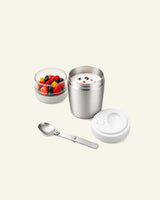
For example, the Greentainer Overnight Oats and Yoghurt Container has an 18 oz main section and separate 8 oz topping compartment.
Yoghurt or oats can stay below while granola, nuts or cereal stay in the separate section until breakfast.
Does separate storage matter more when commuting?
Yes.
At home, you can simply keep the granola bag in the cupboard and add it to your yoghurt when you sit down.
At work, that is not normally an option.
Whatever you want for breakfast has to travel with you.
That makes separate compartments more useful for commuters.
You can prepare everything at home, put the complete container in your bag and mix the toppings in when you are ready to eat.
What if I prepare breakfast the night before?
This is when topping separation becomes particularly useful.
If granola goes into the yoghurt at 9 pm and you eat breakfast at 8 am, it has been exposed to moisture for around eleven hours.
By then, much of the original crunch is likely to be gone.
Keeping the granola separate means you can still do all the preparation the night before without sacrificing texture.
Your morning routine becomes:
take the container from the fridge, put it in your bag and leave.
There is no need to measure granola at 7 am.
Can you prepare several breakfasts in advance?
Yes, although freshness varies by ingredient.
The wet breakfast can be prepared ahead according to the recipe you use.
Dry toppings can be portioned separately.
If your container has its own topping section, you can prepare both at the same time while preventing the ingredients from touching.
This can make weekday meal prep much easier.
How much granola should go in the topping compartment?
That depends on the breakfast.
A small sprinkle adds texture without dominating the yoghurt.
A larger portion turns the meal into something closer to a yoghurt-and-granola bowl.
The advantage of a separate compartment is that you can carry more than you need and add only as much as you want.
You can also combine several dry toppings.
For example:
-
granola + almonds
-
granola + pumpkin seeds
-
cereal + nuts
-
granola + coconut flakes
Can fruit and granola share the same topping compartment?
Sometimes.
Dry fruit such as raisins can sit comfortably with granola.
Fresh fruit can release moisture, especially after being cut.
If you put juicy berries directly against granola for several hours, the granola closest to the fruit may begin to soften.
If preserving crunch is the main objective, keep very wet fruit away from the dry ingredients.
Fresh fruit can stay in the main yoghurt section instead.
Should honey be kept separate?
It depends on how you prefer the breakfast.
Honey will not make granola soggy as quickly as yoghurt, but it can make the pieces sticky and change their texture.
If you like honey coated over the granola, that may be exactly what you want.
Otherwise, add honey directly to the yoghurt or oats and keep the granola dry.
What about peanut butter?
Nut butter usually belongs in the main section.
It mixes well with oats and yoghurt and does not need to stay crisp.
You can swirl it through the breakfast when preparing it or add it immediately before eating.
Is yoghurt with separate granola better for school lunches?
For older children and teenagers who enjoy yoghurt and granola, keeping the topping separate can make the packed breakfast or snack more appealing.
The main issue is convenience.
Multiple small containers are easier to lose and create more washing.
A single container with a topping section can simplify packing.
Always choose a size and design appropriate for the person carrying it.
Do you need an insulated container for yoghurt?
If yoghurt will be away from refrigeration for an extended period, temperature management is important.
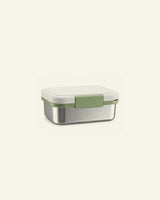
An insulated stainless steel container can help maintain temperature while travelling, although it does not replace proper food-safety practices.
For normal commuting, the breakfast should ideally begin properly chilled.
If it will remain out for a long time, consider using an insulated lunch bag or another suitable cooling method as well.
The Greentainer Stainless Steel Yoghurt Cup uses an insulated lower container and is designed for breakfasts and meal prep taken away from home.
What is the easiest way to pack yoghurt and granola for work?
A simple setup is:
Main section
Yoghurt, overnight oats or chia pudding.
Topping section
Granola, cereal, nuts or other dry ingredients.
Morning
Take the prepared container from the fridge.
At work
Open the topping section, add the granola and stir if you want.
That is all.
It avoids carrying an entire granola packet to the office and keeps the texture closer to what you would get when preparing breakfast fresh at home.
Should granola be kept separate from yoghurt?
If you care about crunch, yes.
Granola can be mixed with yoghurt hours in advance, but its texture will change as it absorbs moisture.
Keeping it separate is less about food rules and more about getting the breakfast you actually want to eat.
For overnight meal prep and commuting, a separate topping compartment is particularly useful because everything can still be packed the night before.
If you regularly take yoghurt, overnight oats or porridge to work, you can see the Greentainer 26 oz Breakfast Container with separate topping compartment and folding spoon.
The simplest rule is also the most useful: if you want it soft, mix it in. If you want it crunchy, keep it separate until breakfast.


